

Call us now
08045814334

 Send Inquiry
Alumina Ceramic Balls
MOQ : 25 Kiloohms
Alumina Ceramic Balls Specification
- Product Type
- Ball
- Ceramic Type
- Alumina Ceramic Balls
- Material
- Alumina Ceramic
- Packaging Type
- Bags/Drums
- Water Absorption
- <0.01%
- Crushing Strength
- Varies by size, typically high
- Size Range
- 3 mm to 90 mm
- Chemical Resistance
- Excellent to most acids and alkalis
- Bulk Density
- 3.6 g/cm³ (approx)
- Operating Temperature
- Up to 1600°C
- Shape
- Sphere
- Application
- Grinding, Filtration, Catalyst Support
- Alumina Content
- 92% - 99%
- Color
- White
Alumina Ceramic Balls Trade Information
- Minimum Order Quantity
- 25 Kiloohms
- Main Domestic Market
- All India
About Alumina Ceramic Balls
The Alumina Ceramic Balls that brought forth by us are most extensively utilized for the purpose of grinding in a ball mill. These kinds of balls can effectively grind and mills a variety of materials due to their high density, robustness, super abrasion resistance and durability. Made up of the best grade alumina ceramic material with cutting-edge processing technology, the presented Alumina Ceramic Balls can be acquired by innumerable honored patrons at budget-friendly prices with safe packaging options.
| Material | Alumina ceramic |
| Shape | Round |
| Size/Dimension | As per requirement |
| Grade Standard | Standard |
| Country of Origin | Made in India |
Superior Material for Demanding Applications
Alumina Ceramic Balls offer exceptional mechanical strength, heat resistance, and chemical durability, making them ideal for use in extreme processing environments. With an alumina content of 92% to 99%, these spherical balls maintain structural integrity even at high temperatures and in the presence of aggressive chemicals. Their high density and low water absorption further enhance their performance across industries.
Versatile Uses Across Industries
Whether used for precision grinding in mills, supporting catalysts in reactors, or filtering particulates in fluid streams, alumina ceramic balls deliver reliable results. Available in a wide range of sizes, they are suitable for highly specialized industrial requirements, efficiently contributing to product quality and operational longevity.
FAQ's of Alumina Ceramic Balls:
Q: How are alumina ceramic balls typically used in industrial applications?
A: Alumina ceramic balls are commonly used for grinding in ball mills, acting as support media for catalysts in chemical processing, and as filtration media in water and gas purification systems. Their versatility stems from their excellent toughness, chemical resistance, and high operating temperature.Q: What benefits do alumina ceramic balls offer compared to other grinding media?
A: Alumina ceramic balls provide exceptional hardness, wear and chemical resistance, and high thermal stability. These properties ensure long operational life, reduced contamination of processed materials, and consistent performance under harsh conditions, making them superior to many alternative materials.Q: When should I choose alumina ceramic balls with a higher alumina content?
A: A higher alumina content, closer to 99%, is ideal for applications requiring greater purity, increased mechanical strength, and enhanced resistance to acids or alkalis. This makes them particularly suitable for pharmaceutical, food processing, or advanced chemical applications.Q: Where are alumina ceramic balls sourced from in India?
A: Alumina ceramic balls are manufactured and supplied by a network of exporters, manufacturers, suppliers, and traders across India. They are widely available through industrial supply companies for both domestic and international markets.Q: What is the manufacturing process for alumina ceramic balls?
A: The process typically involves forming high-purity alumina powder into spherical shapes through pressing and rolling, followed by sintering at elevated temperatures. This results in balls with consistent density, high crushing strength, and minimal water absorption.Q: How should alumina ceramic balls be stored and handled?
A: These balls should be stored in dry conditions, ideally in the original bags or drums, to prevent contamination or unnecessary abrasion. They are non-toxic and safe to handle using standard industrial practices.Q: What makes alumina ceramic balls highly resistant to chemicals and high temperatures?
A: Their resistance is due to inherent properties of alumina, including its stable crystalline structure, which does not react with most acids or alkalis, and its ability to endure temperatures up to 1600C without losing structural integrity.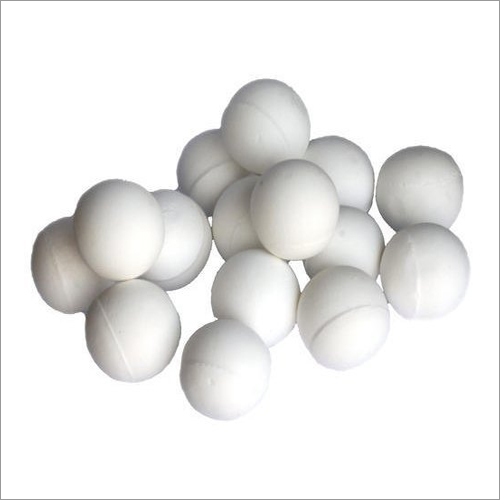
Tell us about your requirement

Price:
Quantity
Select Unit
- 50
- 100
- 200
- 250
- 500
- 1000+
Additional detail
Mobile number
Email

More Products in Ceramic Balls Category
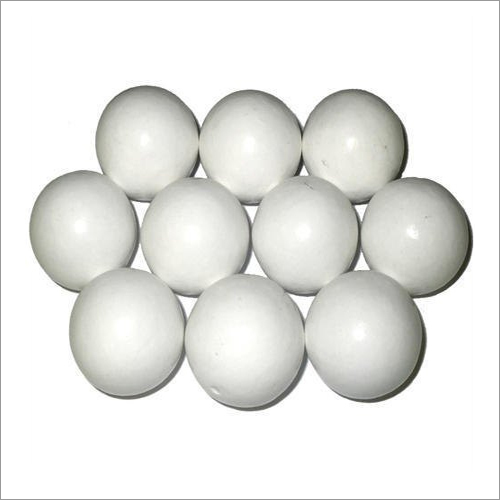
White Ceramic Balls
Minimum Order Quantity : 25 Kiloohms
Product Type : Others, Ceramic Balls
Ceramic Type : Other, White Ceramic
Material : Other, High Purity Alumina / Ceramic
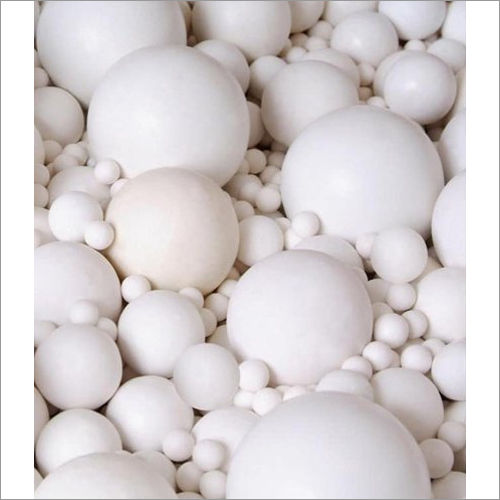
Grinding Ceramic Balls
Minimum Order Quantity : 26 Kits
Product Type : Others, Grinding Ball
Ceramic Type : Other, Alumina Ceramic
Material : Other, Alumina Oxide

SYNCO INDUSTRIES LIMITED
GST : 08AAACS5548J1Z2
GST : 08AAACS5548J1Z2
B No. 16- A- 3, Heavy Industrial Area, Jodhpur - 342003, Rajasthan, India
Phone :08045814334
 Send Inquiry
- Molecular Sieves
- Zirconia Alumina Composite Beads
- Vibro Finishing Beads
- Black Carbon
- Zirconium Silicate Beads
- Alumina Zirconia Grains
- Finishing Media
- Activated Alumina
- Steatite Ceramic
- Yttria Stabilized Zirconia Beads
- Coating Chemical
- Zeolite Granules
- SS Balls
- Ceramic Balls
- Milling Machine
- Zeolite Powder
- Attrition Mills
- Zircon Sand
- CARBON BLACK
- DISPERSING AGENTS
- ZIRCONIA DENTAL BLOCKS
- Dentist
 Send Inquiry
 Send SMS
SYNCO INDUSTRIES LIMITED
All Rights Reserved.(Terms of Use)
Developed and Managed by Infocom Network Private Limited.
Developed and Managed by Infocom Network Private Limited.

